
Karnataka Rajyotsava: Remembering Coorg, the Little State That Once Stood on Its Own
Once India's smallest state, Coorg had its own administration, political identity and proud history before merging with Mysore State in 1956. On Karnataka Rajyotsava, Saritha Devaiah Ballachanda revisits the little state's journey and the memories of a distinct identity that continues to endure in Kodagu.
By: Saritha Devaiah Ballachanda
Every November 1, as Karnataka celebrates its formation, there is another chapter of history that deserves to be remembered, particularly in the hills of Kodagu. Long before it became a district of Karnataka, Coorg was a state of its own – small in size, distinct in character and proud of its identity.
For many, November 1 is a celebration of Karnataka unity and the coming together of different regions to form a larger state. But for Kodagu, the day also carries memories of a different kind. It takes us back to a time when this little hill region had its own administration, political leadership and place on India's map.
The story of Coorg is, in many ways, both inspiring and poignant. It was among India's smallest states, yet its size did not prevent it from developing a distinct administrative identity. Its government was close to the people, and public administration was often described as accessible and responsive to everyday needs. It was a reminder that effective governance need not always depend on the size of a state.
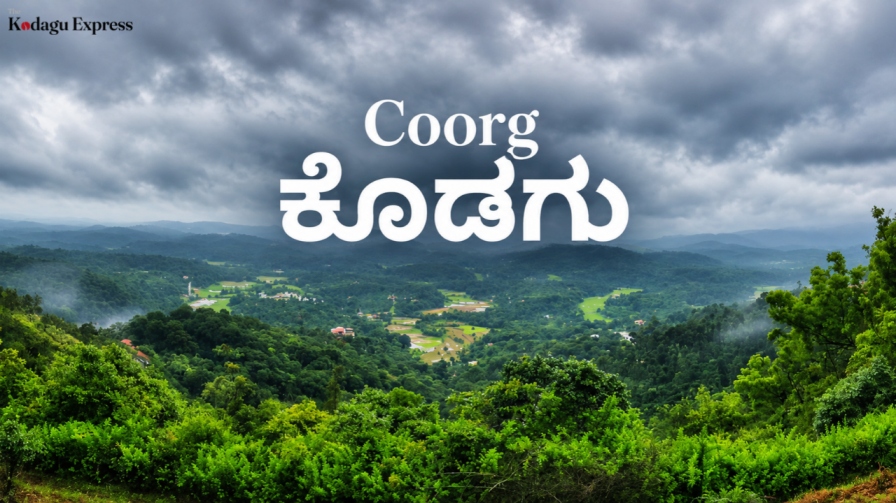
Nestled in the Western Ghats, Coorg was a land of remarkable natural wealth. Its forests, coffee plantations, orange orchards and honey were central to its economy and character. The River Cauvery, which begins its journey at Talacauvery in the Brahmagiri hills, gave the region significance far beyond its geographical boundaries. Mercara, now Madikeri, served as its capital.
The region also carried a distinctive social and cultural identity. The Kodava community, with its traditions, customs and language, had a strong sense of belonging to its homeland. Although Kodagu had close cultural and linguistic connections with neighbouring Kannada-speaking regions, it retained a character of its own.
The transition to democracy after Independence gave Coorg a new political chapter. In 1950, it became a Part C State, with its own Legislative Assembly and administration. Following the first Assembly elections in 1952, C.M. Poonacha became its Chief Minister. The Assembly had 24 members, while the Cabinet had just two ministers. Kuttur Mallappa held the Home portfolio.
But the question of Coorg's political future was already taking shape. The movement for the unification of Kannada-speaking regions was gaining momentum, although not everyone in Coorg welcomed the idea of losing its separate status.
One of the strongest voices against the proposed merger was the Takkadi Party, led by veteran Gandhian Pandyanda Belliappa. Its opposition reflected a larger concern: that Coorg's distinct identity and administrative interests might be overshadowed within a much bigger state. The Congress, led by Poonacha, emerged victorious in the 1952 elections, but the debate over merger remained an important part of the region's political history.
The turning point came with the recommendations of the States Reorganisation Commission, headed by Fazl Ali. The commission's proposals led to the reorganisation of states along linguistic lines. On November 1, 1956, under the States Reorganisation Act, Coorg ceased to exist as a separate state and became a district of the enlarged Mysore State.
With that, a small state with its own Assembly, Chief Minister and administrative identity became part of a much larger political entity. Mysore State was subsequently renamed Karnataka on November 1, 1973.
Nearly seven decades have passed since Coorg lost its separate statehood. Generations have grown up knowing Kodagu as an integral part of Karnataka. The merger brought the region into a larger administrative and political framework, connecting it more closely with the rest of the state. Yet, the memory of its years as an independent administrative unit remains an important part of its history.
As Karnataka marks another Rajyotsava, perhaps it is worth pausing to remember that the state was built not merely by drawing boundaries on a map, but by bringing together regions with their own stories.
Coorg may have been small in size, but it was never small in identity. Its journey from a separate state to a district of Karnataka is a reminder that geographical size does not determine the depth of a people's history or their attachment to their homeland.
The little state may have disappeared from India's political map, but its memories, traditions and distinct identity continue to live on in the hills of Kodagu.
About the Author: Saritha Devaiah Ballachanda is the Managing Editor of The Kodagu Express.