
Kummu Curry: The earthy flavours of Kodava cuisine
Known as kumm or kummu, mushrooms have long been part of local food traditions. Different varieties are recognised by their traditional names, reflecting their appearance, size and characteristics.
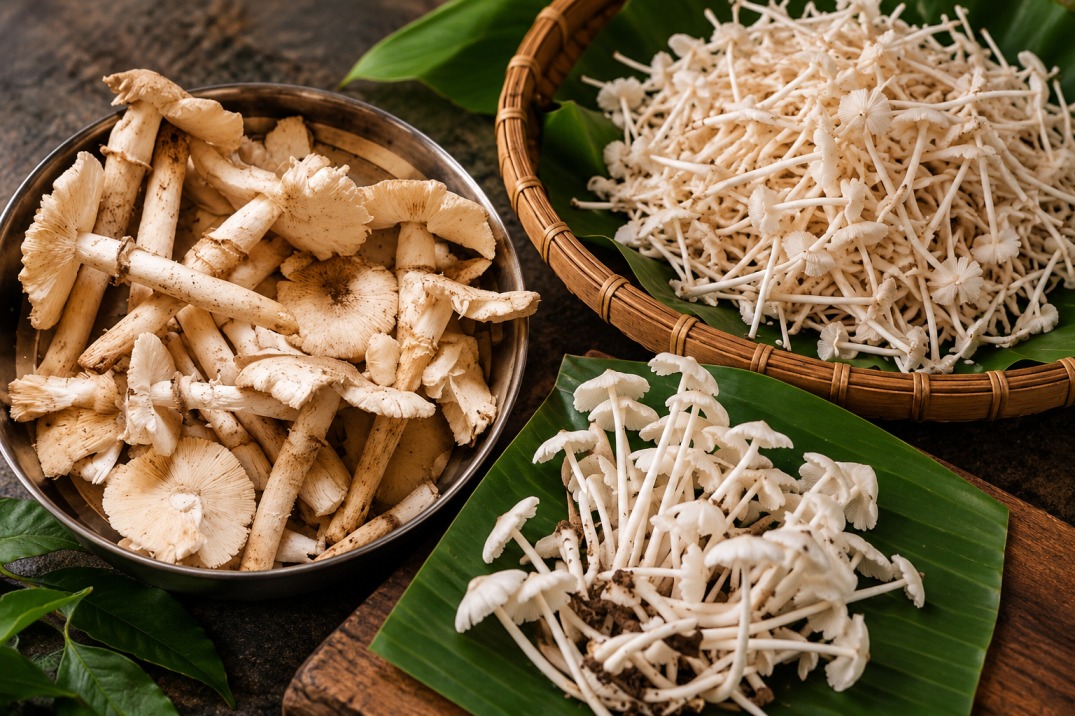
In Kodagu, food is deeply connected to the region’s landscape, local ingredients and family traditions. Among the distinctive dishes of Kodava cuisine is Kummu Curry, a traditional mushroom preparation cherished for its earthy flavour, rich gravy and versatility.
Known as kumm or kummu, mushrooms have long been part of local food traditions. Different varieties are recognised by their traditional names, reflecting their appearance, size and characteristics. Recipes passed down through generations showcase the community’s knowledge of locally available ingredients and methods of preparation.
The varieties traditionally known as Nuchhi Kumm, Alandhi Kumm, Kode Kumm, Nethale Kumm and Pandhi Kumm are among those associated with Kodagu’s mushroom heritage. Each has distinctive characteristics. Nuchhi Kumm is described as a small mushroom that grows in clusters, while Kode Kumm is known for its umbrella-like appearance. Nethale Kumm is associated with a pointed cap, and Pandhi Kumm is noted for its meaty texture. Alandhi Kumm is another well-known variety used in traditional curry and fried preparations. Local names and identifications may vary across households and communities.
The appeal of Kummu Curry lies in the combination of mushrooms with a fragrant masala. A traditional preparation using Nuchhi Kumm includes freshly grated coconut, cumin seeds, green chillies, mustard seeds, onions, tamarind, coriander powder and salt. The coconut and cumin are ground into a paste, while the onions, chillies and mustard seeds are sautéed before the cleaned mushrooms are cooked. The ground masala is then added to create a flavourful, thick gravy. Recipes differ according to the mushroom variety and family preference.
Kummu Curry is commonly enjoyed with akki otti, the traditional rice-based flatbread. It also pairs well with steamed rice and kadambuttu, the familiar steamed rice dumplings of Kodava cuisine.
Beyond its taste, Kummu Curry represents the culinary knowledge preserved in Kodava households. The use of traditional mushroom varieties, distinctive masalas and familiar rice accompaniments makes it an important part of Kodagu’s food heritage.
As traditional recipes continue to be shared across generations, Kummu Curry remains a celebration of local flavours and the diversity of Kodava cuisine.
Food safety note: Wild mushrooms should be consumed only when identified as edible by a qualified expert. Local names alone are not sufficient to establish safety.